Serissa
Choose a very bright position and avoid repeated relocation. Outdoor summer culture can help, but acclimatise slowly to sun, wind and temperature.
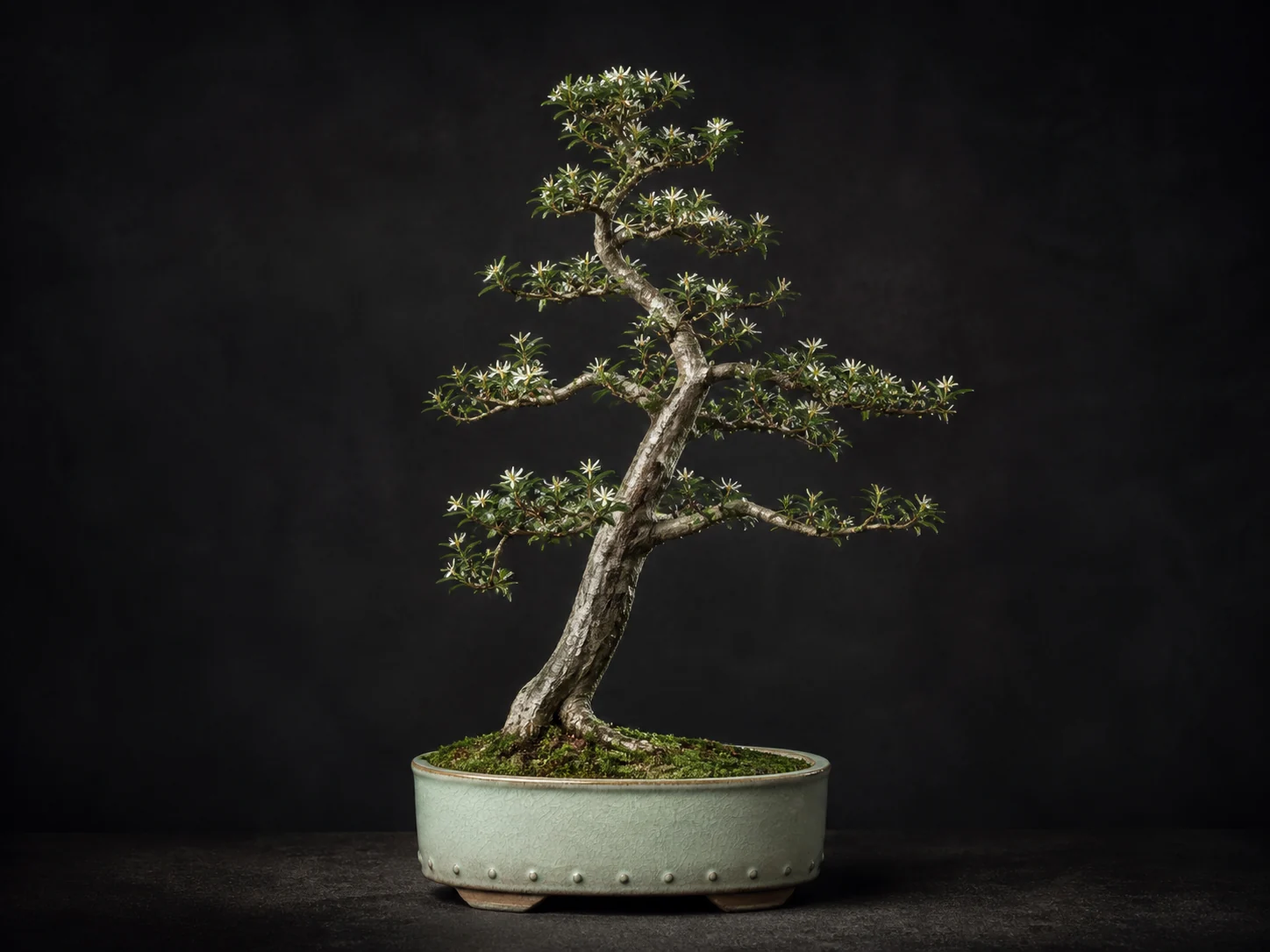
Understand the whole system.
Stability matters
Choose a very bright position and avoid repeated relocation. Outdoor summer culture can help, but acclimatise slowly to sun, wind and temperature.
Neither drought nor saturation
Check frequently and water thoroughly as the upper layer begins to dry. The fine roots react badly to both complete drought and stagnant water.
Fine but oxygen-rich
Use a small-grained, structurally stable mix that distributes moisture while retaining air. Do not compensate for poor substrate with tiny daily sips.
Refine healthy growth
Shorten shoots after extension to build fine branching. Avoid heavy pruning when the tree is recovering from leaf loss or relocation.
Disturb roots conservatively
Repot during stable active growth and reduce roots moderately. Warmth, light and careful moisture are essential during recovery.
Choose one coherent strategy
Either overwinter cool and bright or warm with strong supplemental light. Warm, dark rooms create weak growth and repeated leaf drop.
Leaf drop has many triggers
Relocation, temperature shifts, dry roots, waterlogging and low light all cause similar symptoms. Change one variable at a time.