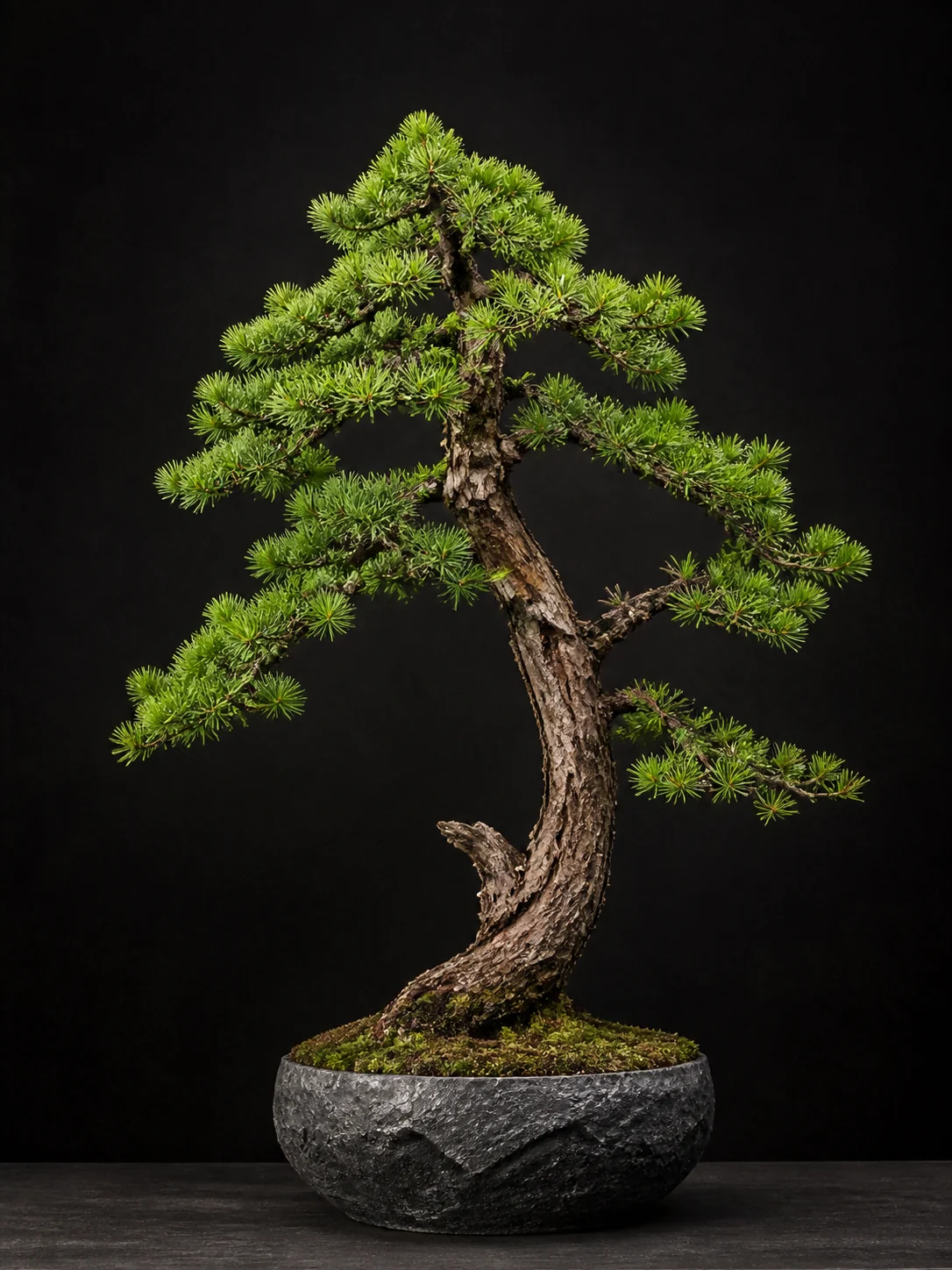
Japanese larch
Keep in full sun with excellent air movement. During severe summer heat, protect the pot from overheating while the crown remains bright.
Understand the whole system.
Sun, air and a cool root zone
Keep in full sun with excellent air movement. During severe summer heat, protect the pot from overheating while the crown remains bright.
High demand in active growth
Soft spring shoots and dense foliage use substantial water. Check often and water thoroughly, but preserve oxygen in the root zone.
Open and moisture-balanced
A durable granular mix should drain freely without drying instantly. Larch roots resent both stagnant winter wetness and summer drought.
Understand extension growth
Use extension to build branches, then shorten after the growth firms. Wire young shoots carefully and remove wire before rapid thickening leaves scars.
Repot as buds colour and swell
The safe window is brief and depends on local development. Prepare materials in advance and avoid combining major root reduction with severe top work.
Cold is part of the cycle
Japanese larch is very hardy and requires a cold dormant season. Protect only the container and roots during exceptional frost or drying exposure.
Yellow autumn needles are normal
The species is deciduous. Off-season yellowing, weak buds or dieback require checks of water, heat, roots and fungal problems.