Elephant bush
Give as much direct light as possible. Move outdoors gradually in warm weather and bring it inside before cool autumn nights.
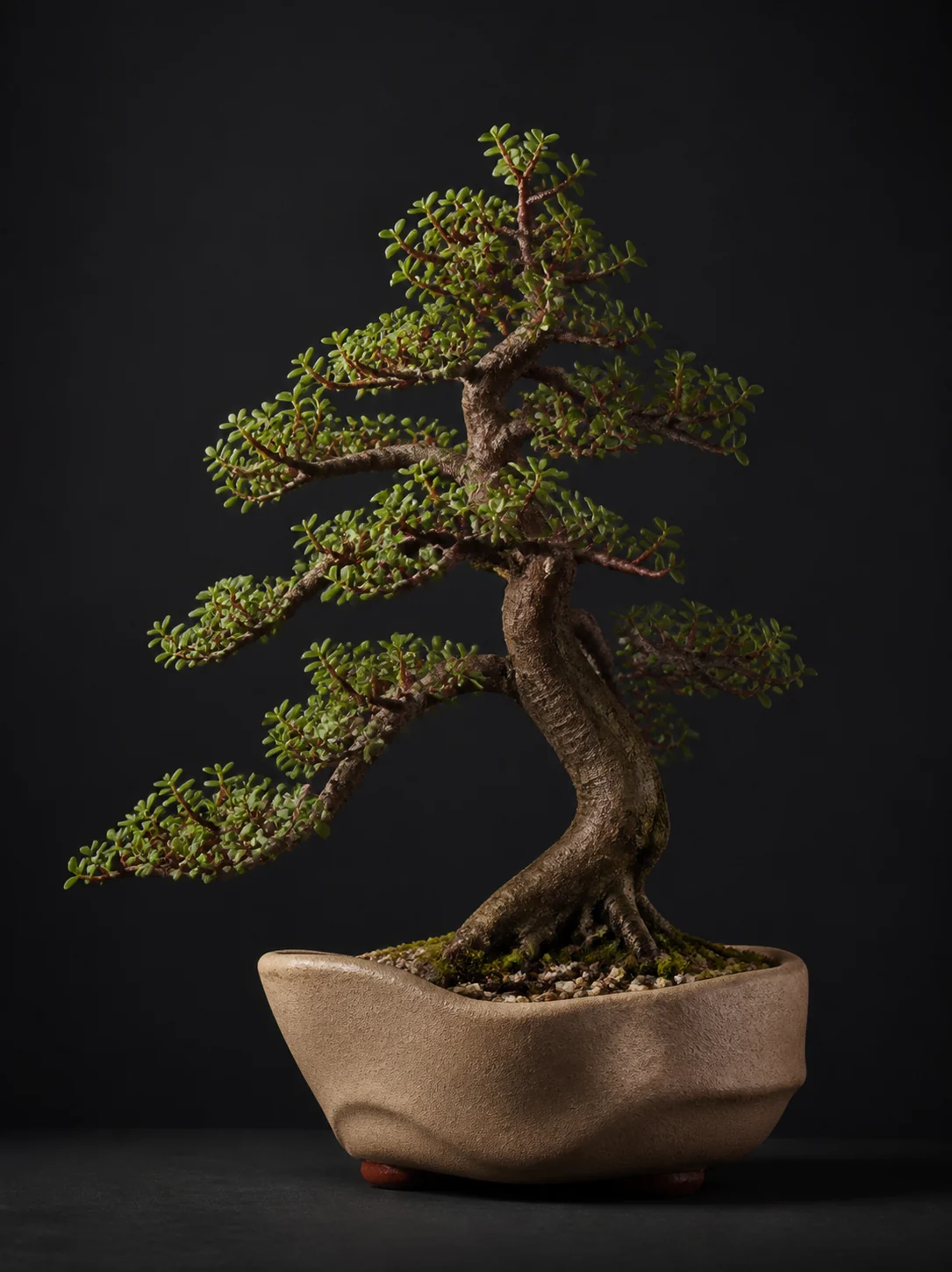
Understand the whole system.
Sun builds compact growth
Give as much direct light as possible. Move outdoors gradually in warm weather and bring it inside before cool autumn nights.
Let stored water work
Water thoroughly, then allow the substrate to dry clearly. Thick leaves and shoots store water; constant moisture is a greater danger than brief dryness.
Mineral and fast draining
Use a coarse, stable mix with rapid drainage. A shallow decorative pot must not remain wet around the fine roots.
Grow, then select
Let vigorous shoots extend before shortening. Soft branches mark easily, so wire loosely and inspect often.
Repot in active warmth
Repot only when temperatures are reliably warm and growth is active. Let damaged roots settle briefly before returning to normal watering.
Warm winter, maximum light
Keep frost-free and preferably above 12–15 °C. Low winter light requires less water; warmth plus wet soil invites rot.
Soft leaves tell a story
Wrinkling can mean thirst or damaged roots that cannot absorb water. Yellow translucent leaves often point to excess moisture.