Chinese elm
Chinese elm stays stronger outdoors through the growing season. Acclimatise gradually to sun and protect from severe frost according to origin.
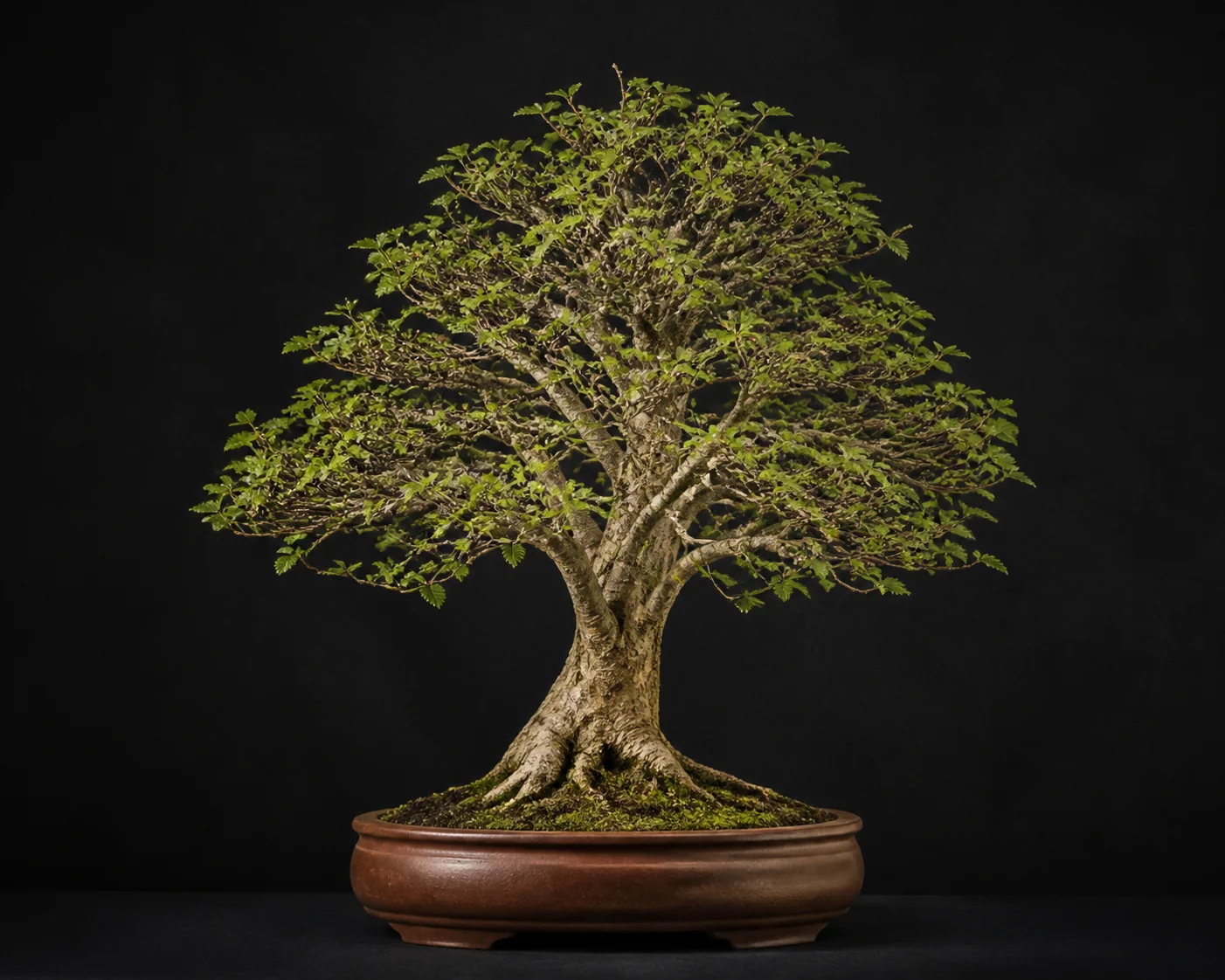
Understand the whole system.
Give it real daylight
Chinese elm stays stronger outdoors through the growing season. Acclimatise gradually to sun and protect from severe frost according to origin.
Moisture without stagnation
Water thoroughly once the upper layer begins to dry. Fine roots dislike complete drought, while dense wet soil loses oxygen.
Stable and free draining
Use a granular mix that holds moderate moisture but drains immediately. Adjust retention to climate and pot depth.
Prune after growth extends
Let shoots gain strength, then shorten them to build ramification. Remove crossing and inward growth deliberately.
Repot before strong growth
Repot as buds become active, usually every one to three years depending on age and root density.
Cool and bright is safer
Hardy specimens can overwinter protected outdoors; less hardy imports need bright, cool, frost-free quarters.
Leaf drop is a clue
Location change, weak light, drought, saturated roots or pests can all cause leaf loss. Reconstruct the sequence first.