Mugo pine
Keep outdoors in full sun with free air movement. Rotate the tree for balanced light, but avoid changing orientation abruptly during extreme heat.
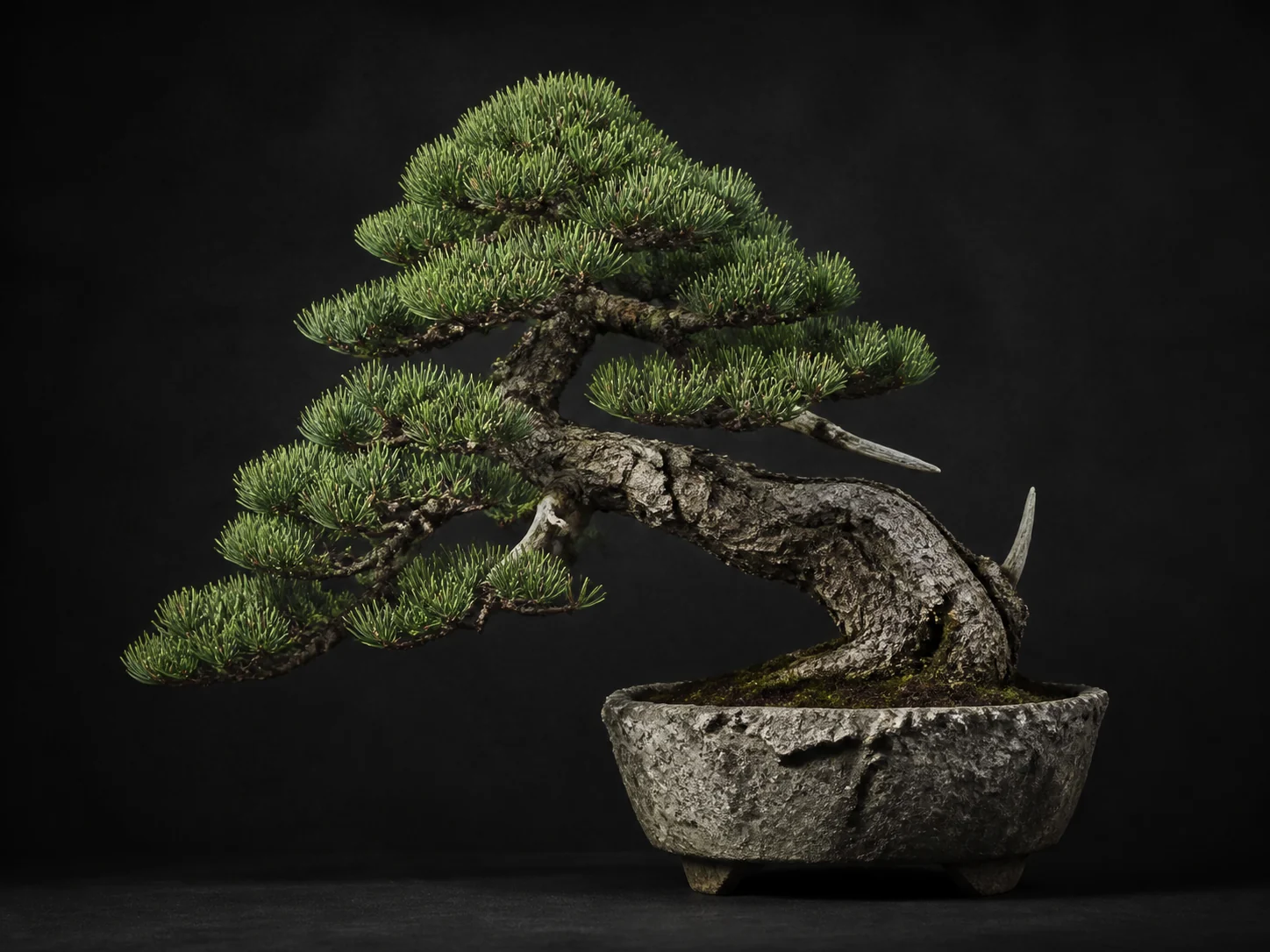
Understand the whole system.
Sun builds compact needles
Keep outdoors in full sun with free air movement. Rotate the tree for balanced light, but avoid changing orientation abruptly during extreme heat.
Water the root ball, not a schedule
Allow the surface to dry slightly, then water thoroughly. Never interpret drought tolerance as permission for the compact root ball to dry completely.
Structure must endure
A free-draining mix such as equal parts akadama, pumice and lava is a starting point. Particle size and pot depth matter more than a fixed recipe.
Work with pine energy
Do not copy techniques from Japanese black pine. Timing and strength of candle work depend on development stage, climate and tree vigour.
Repot conservatively
Repot as spring activity begins, preserving enough healthy root and associated mycorrhiza. Avoid combining major root work with heavy styling.
Cold, light and air
Mugo pine is highly frost-hardy, but its shallow pot needs protection from drying wind and severe prolonged freezing. Never overwinter indoors.
Needles reveal the system
Yellowing can follow old-needle turnover, waterlogging, root trouble or nutrient imbalance. Diagnose pattern and timing before treating.