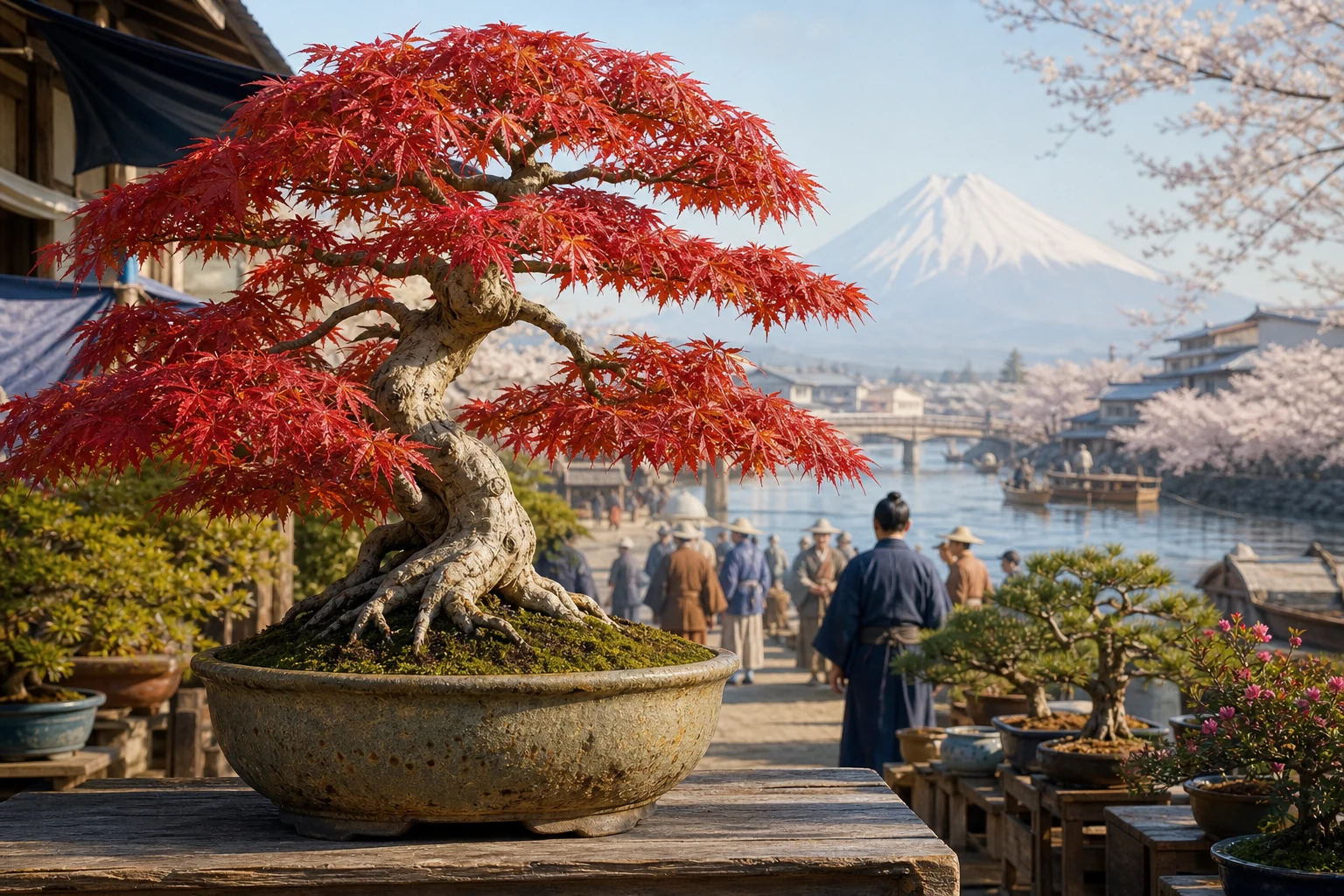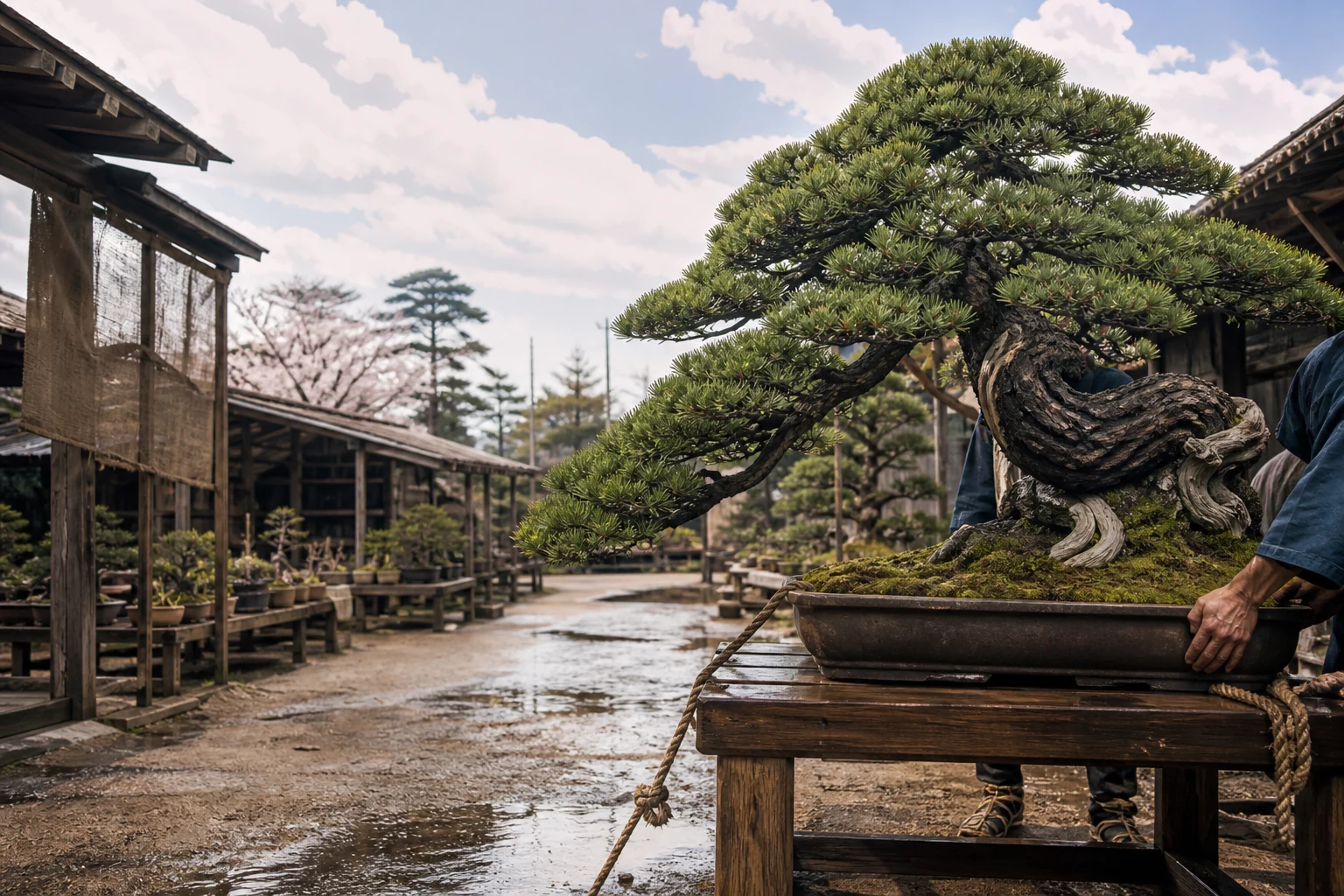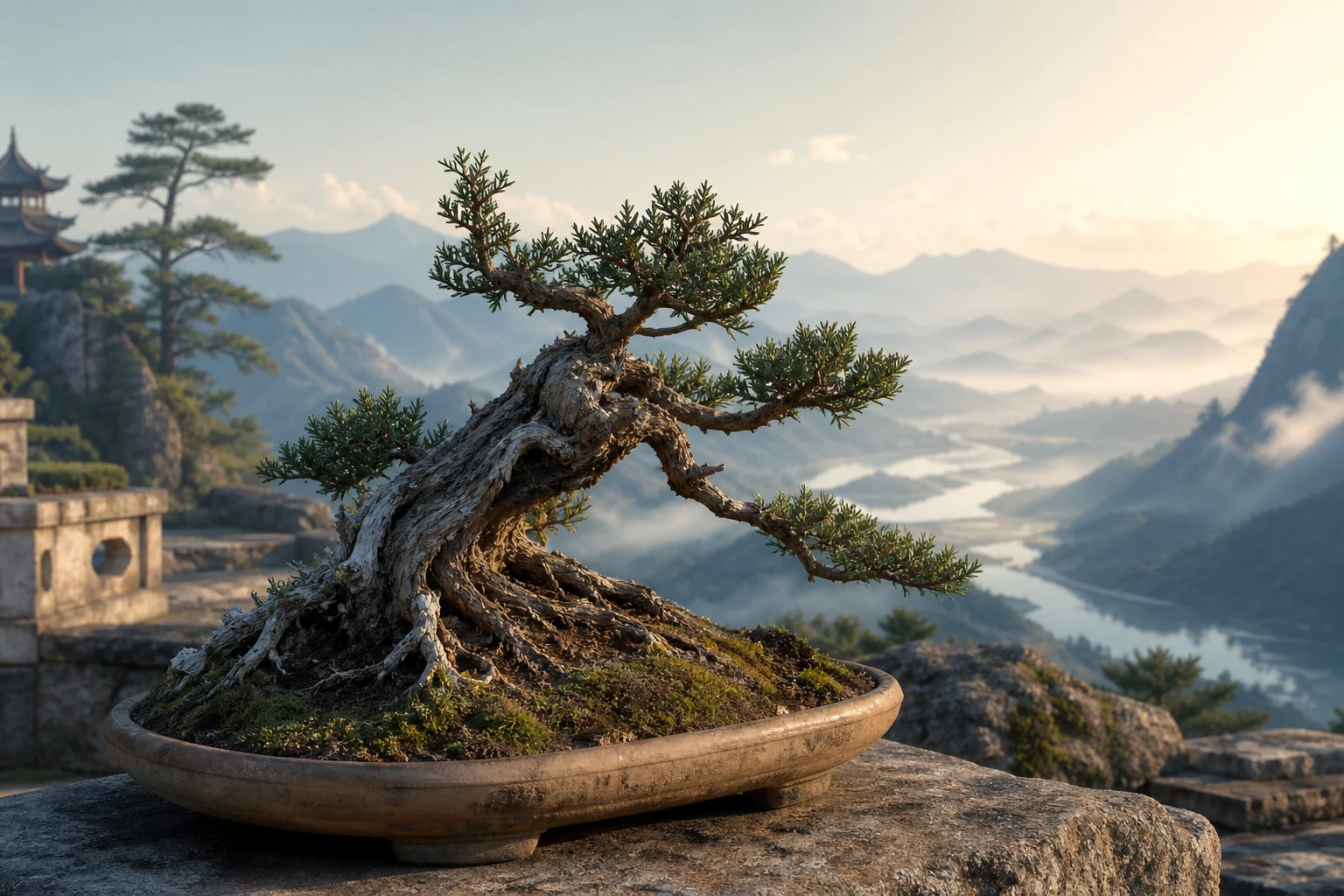
A landscape fits inside a tray.
Chinese gardeners and scholars condensed rocks, trees and imagined landscapes into penjing. The aim was not mere miniaturisation, but the character of a place.
Evidence and legend kept distinctExplore more than 1,300 years from Chinese penjing to contemporary bonsai through seven documented eras.
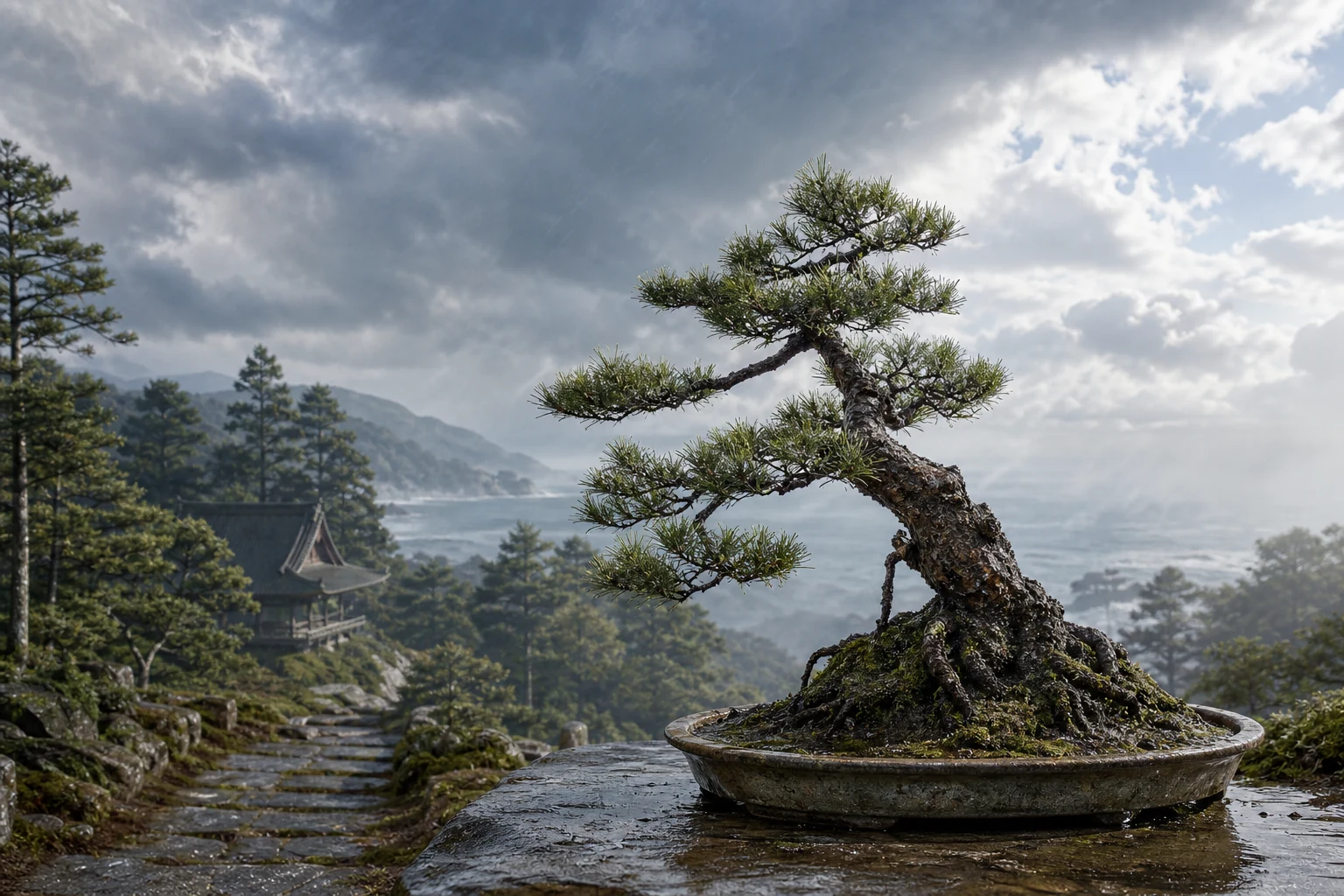
Chinese gardeners and scholars condensed rocks, trees and imagined landscapes into penjing. The aim was not mere miniaturisation, but the character of a place.
Evidence and legend kept distinct
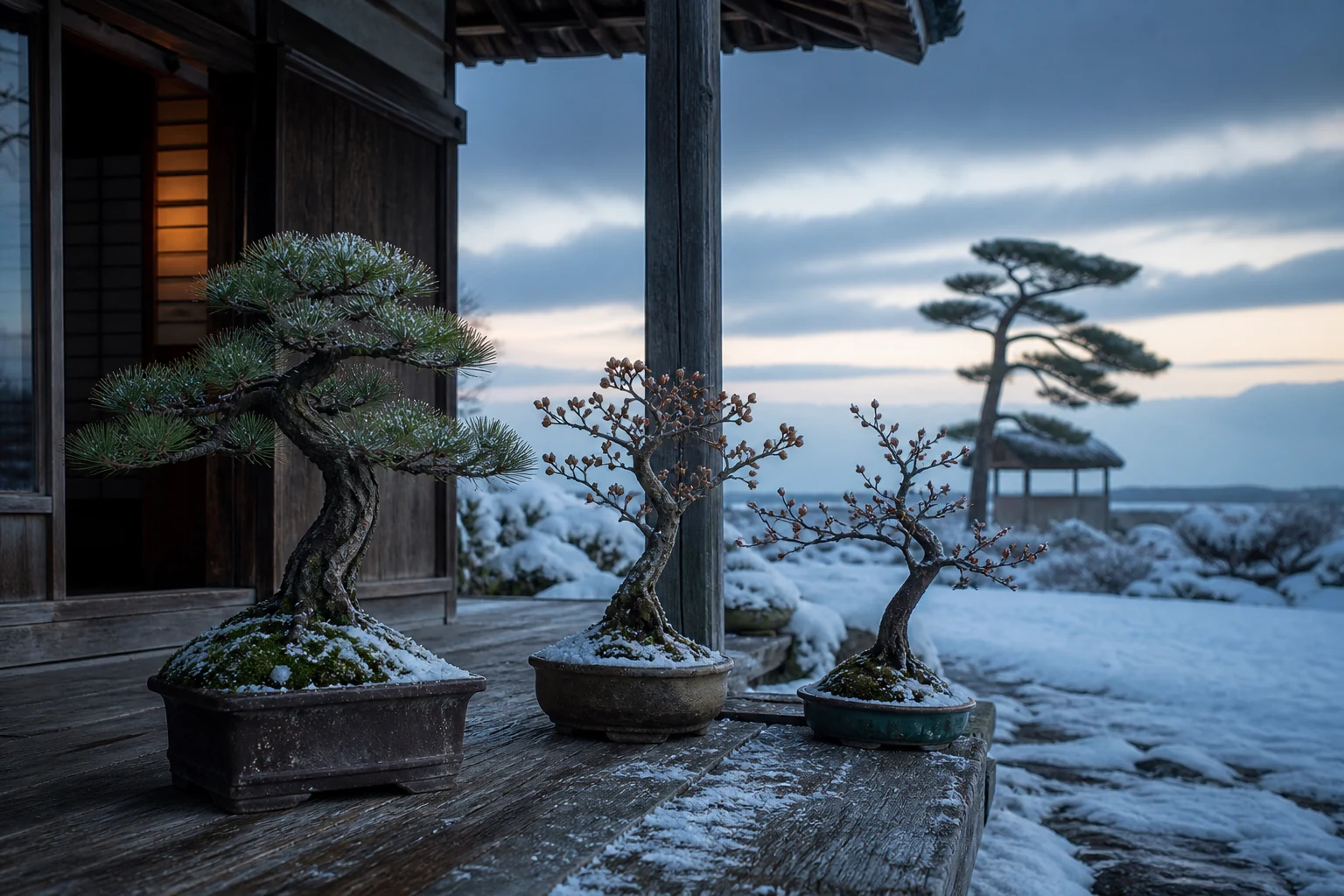
Medieval sources document planted containers and Chinese-influenced practices. A distinct Japanese tradition formed gradually rather than through one single arrival.
Evidence and legend kept distinct
The Nō play Hachi no Ki tells of an impoverished samurai who burns treasured potted trees for a guest on a snowy night. It is literature and legend, not a literal history of bonsai.
Evidence and legend kept distinct
Horticulture, natural history, merchant networks and sencha culture changed how potted trees were grown, named and presented.
Evidence and legend kept distinct
After the 1923 Great Kantō Earthquake, Tokyo bonsai growers sought safer land. Ōmiya Bonsai Village became a lasting community of gardens and specialist knowledge.
Evidence and legend kept distinct
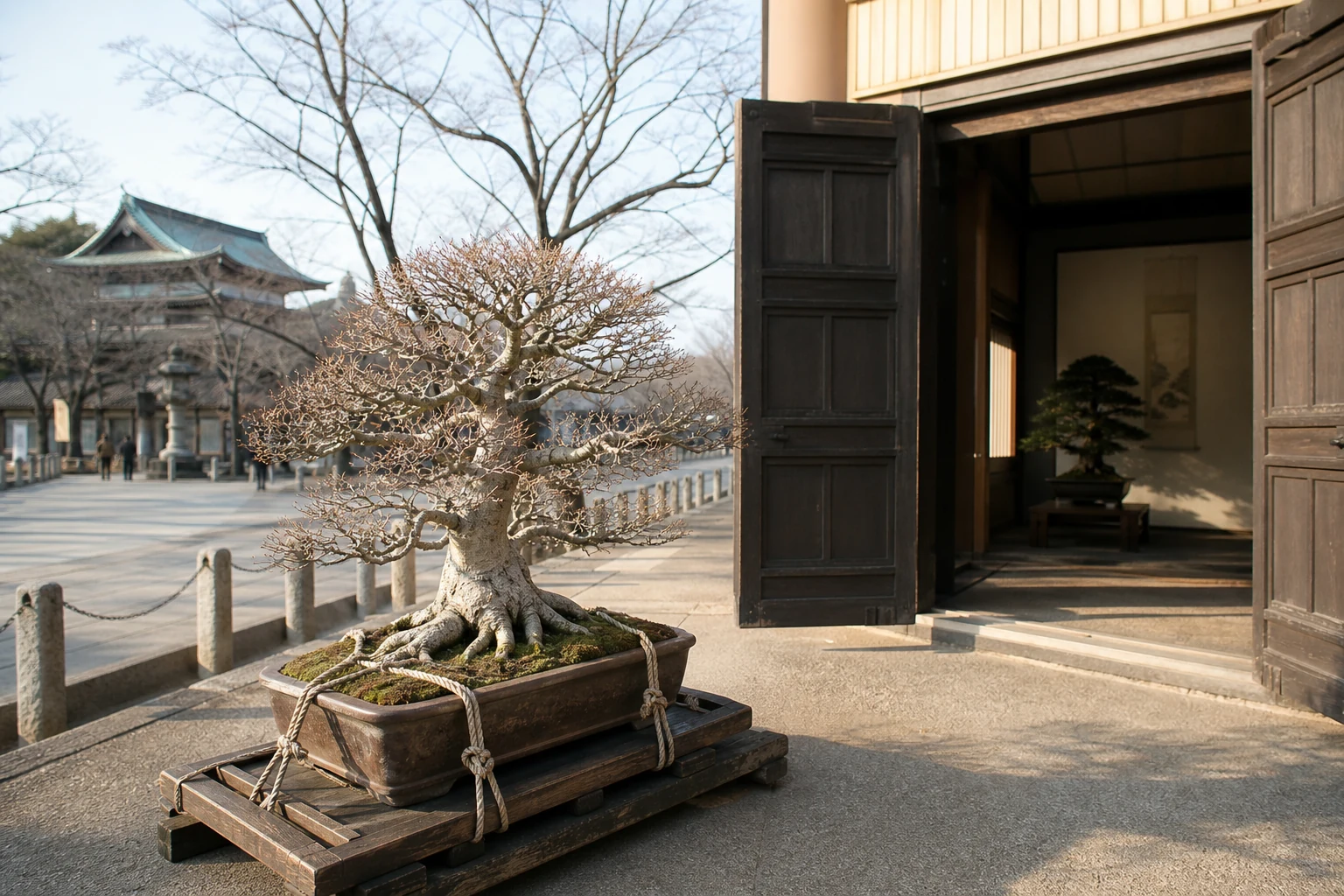
The first Kokufū Bonsai Exhibition opened in 1934. Selection, display and public criticism helped establish modern bonsai as an art institution.
Evidence and legend kept distinct
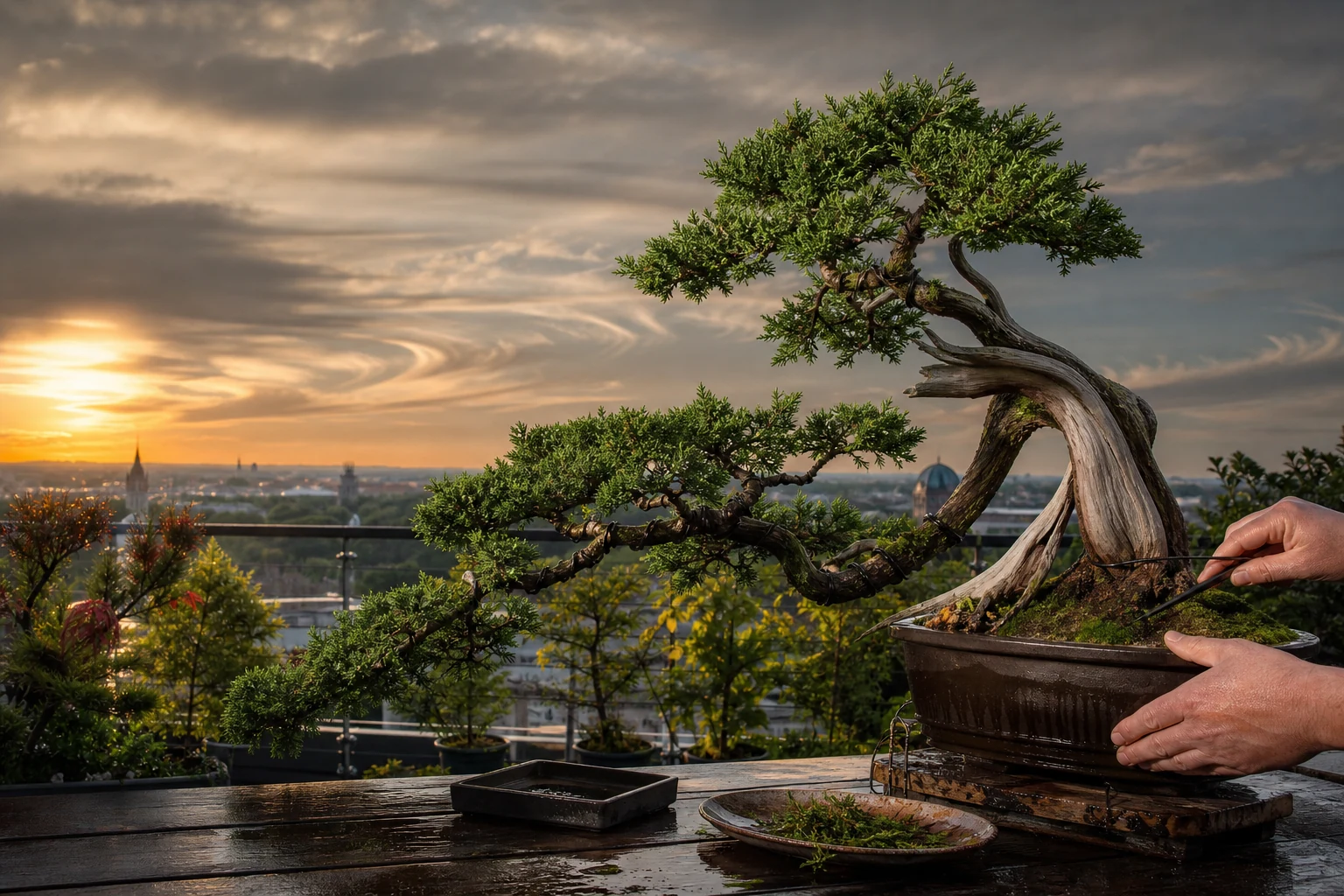
Bonsai and penjing are now practised worldwide. Weather data and phenology can sharpen observation, but do not replace horticultural judgement or tradition.
Evidence and legend kept distinct